
TL;DR
The decision between managing "pipes" and building business outcomes is the primary reason Why Condense Managed Kafka Is Better Than Running Your Own Kafka Cluster. For high-growth organizations, the challenge is rarely a lack of raw data; it is the heavy operational burden that comes with trying to harness it. When a team manages its own Kafka cluster, its most talented engineers often spend their time lost in server maintenance, manual partition rebalancing, and the friction of complex scaling. This blog explores why shifting to a specialized, Managed BYOC (Bring Your Own Cloud) model is no longer just a convenience, but a strategic necessity. We will dive into how this model allows companies to keep data within their own secure private cloud while ensuring sub-second latency for millions of events and reducing infrastructure costs by up to 60%.
By the end of this article, it will be clear how offloading the foundational layers of data streaming allows a business to move faster. We will look at the real-world impact of protocol fragmentation, the financial benefits of cloud optimization, and a detailed case study of a major manufacturer that manages nearly 300,000 assets on Condense, focusing on the business outcomes achieved after the shift. Ultimately, the goal is to show how moving away from infrastructure management allows engineering teams to return to their true purpose, that is writing the proprietary logic and innovative applications that actually move the needle for the business.
The Operational Reality: Why DIY Kafka Stalls Business Growth
Setting up Kafka is one thing, but keeping it alive under pressure is another challenge entirely. When a company decides to self-host, they end up asking their best engineering talent to handle basic chores. Instead of building new features, developers get stuck in a loop of cluster provisioning and security updates. This is a massive indirect cost and it doesn't show up on a bill, but it slows down your entire roadmap.
In industries like connected mobility, industrial IOT and real –time data streaming use cases, data isn't a steady stream. It comes in aggressive waves. A sudden spike in telemetry can easily overwhelm a manual cluster, leading to lag or a total crash. When that happens, innovation stops. Engineers have to drop everything to troubleshoot infrastructure, becoming a cleanup crew for the data pipes rather than creators of the product. Condense Managed Kafka solves this by treating Kafka as a runtime environment rather than just a message broker. It automates the foundational work so that teams can move away from constant maintenance and focus on actual architecture.
The Challenge of Data Volume Frequency and Protocol Fragmentation
One of the biggest hurdles in building a data streaming system from scratch is handling the data volume frequency. In a self-managed setup, the architecture must be designed for the highest possible peak. This means organizations often pay for a massive cluster that sits idle for 90% of the day just to handle the 10% of the time when data spikes.
Additionally, the mobility and IoT sectors suffer from protocol fragmentation. Sensors within a vehicle communicate via various protocols like MQTT, Protobuf, or even legacy TCP/UDP hex strings. In a DIY environment, every new sensor requires a custom-coded ingestion service.
The Condense Advantage:
Verticalized Mobility Stack: Condense includes pre-built Input Connectors (like those for iTriangle, Teltonika, or geofence) that handle the need for parsing automatically.
Intelligent Autoscaling: The Platform Layer of Condense manages high-concurrency bursts by automatically scaling brokers and compute nodes. This ensures that even when a fleet of 100,000 vehicles starts streaming data at once, the system maintains sub-second latency without any manual intervention.
Cloud Cost Optimization through the BYOC Model
One of the biggest misconceptions about self-hosting Kafka is that it is "cheaper" because there is no service fee. This ignores the hidden costs of over-provisioning and the massive expense of "egress fees." When data moves between cloud zones or to third-party SaaS platforms, the bill grows quickly. Also, the indirect cost of engineering time spent to setup, maintain and troubleshoot is also a major operation cost demand by the open source kafka.
Condense BYOC (Bring Your Own Cloud) model addresses these expenses by keeping the infrastructure inside your own account. This shift directly impacts the bottom line:
No Egress Fees: Since the platform stays within your own AWS or Azure account, data never leaves your private network. This eliminates the data transfer fees that typically bloat a Kafka bill.
Reduced Development Time: The Custom Transform Framework and native connectors replace the need for manual "glue code." Instead of spending months building custom decoders, engineers can use built-in tools to manage data flows.
Scaling Efficiency: The system uses automated scaling.
Operational Governance: Features like RBAC, version-controlled pipelines, and schema management are included. This removes the need for engineers to manually configure security and monitoring from scratch.
By eliminating data transfer tolls and automating the management of the cluster, this model reduces the total cost of ownership by up to 40%. It allows the team to stop maintaining cloud infra and start focusing on the applications that drive the business.
Case Study: Focusing on Core Innovation
A major commercial vehicle manufacturer managing 295,000 connected vehicles realized that even with a generic managed Kafka, their engineers were still spending too much time on basic infrastructure tasks.
The problem was that the generic service only managed the server, not the data intelligence. Every time a new vehicle model was added, engineers had to build new decoders and manage complex data structures manually. This demanded massive engineering effort in areas that did not generate revenue.
By migrating to Condense, the manufacturer was able to:
Offload the Burden: They stopped treating Kafka as a maintenance project.
Focus on Innovation: Engineers moved to high-value work like autonomous driving programs and predictive maintenance.
Achieve Results: They processed 129 TB of data monthly with a 20% reduction in cloud spend.
Operational Optimization: Reclaiming Engineering Hours
Every self-managed Kafka cluster carries an "operational cost" This is the ongoing cost of the people and time required to keep the lights on. It involves managing security updates and ensuring the system stays healthy 24/7.
By offloading the infrastructure to the Condense Platform Layer, organizations achieve operation optimization. The platform automates repetitive tasks like upgrades and automated failovers. This is where the real value appears: engineering teams are finally available for innovative complex logic writing.
When engineers are no longer "responsible resource for the infrastructure," they can focus on high-value work within the Application Layer, for example in the mobility industry the engineers can spend time in innovation such as:
Predictive Maintenance: Using the Custom Transform Framework (CTF) to build algorithms that spot battery failures before they happen.
Dynamic Geofencing: Using Alert Utilities to trigger instant actions based on live vehicle location.
Behavioral Analytics: Writing complex logic to score driver safety and improve fleet efficiency.
The Role of AI and Agents in the Modern Pipeline
Modern streaming requires more than just moving data; it requires intelligent orchestration. Condense introduces an Agentic Layer that features specialized AI agents, such as the Developer Agent and Monitoring Agent. These agents help teams build logic and analyze data faster. For example, the Developer Agent can help generate the code for a complex transformation, while the Monitoring Agent provides accurate and contextual insights into the health of the data streams. This level of AI-assisted development is impossible to achieve in a basic self-hosted Kafka setup and allows teams to move from idea to production in weeks rather than months.
Absolute Data Sovereignty and Compliance
In the modern automotive and IoT industry, data is a sensitive asset. Many regions now have strict laws requiring that data generated within their borders stays there. If an OEM uses a standard multi-tenant SaaS provider, they lose control over where their data is stored.
Condense ensures 100% data sovereignty. Because the system runs inside the customer's own cloud, existing security policies apply directly. This includes granular RBAC (Role-Based Access Control) and immutable audit logs. This architecture allows organizations to meet global compliance standards (like India’s DPDP Act or Europe’s GDPR) effortlessly while keeping their proprietary diagnostic logic private.
Key Takeaways
Managed Infrastructure: Condense automates Kafka patches, upgrades, and scaling, eliminating the need for manual DevOps work.
Lower Total Cost: BYOC deployment removes egress fees and uses existing cloud discounts, reducing TCO by up to 60%.
Industry Connectors: Pre-built tools for mobility and IoT remove the need for manual protocol parsing.
Developer Freedom: Offloading server management lets engineers focus on building proprietary logic and safety features.
Data Control: Data never leaves the company's cloud account, ensuring total sovereignty and security.
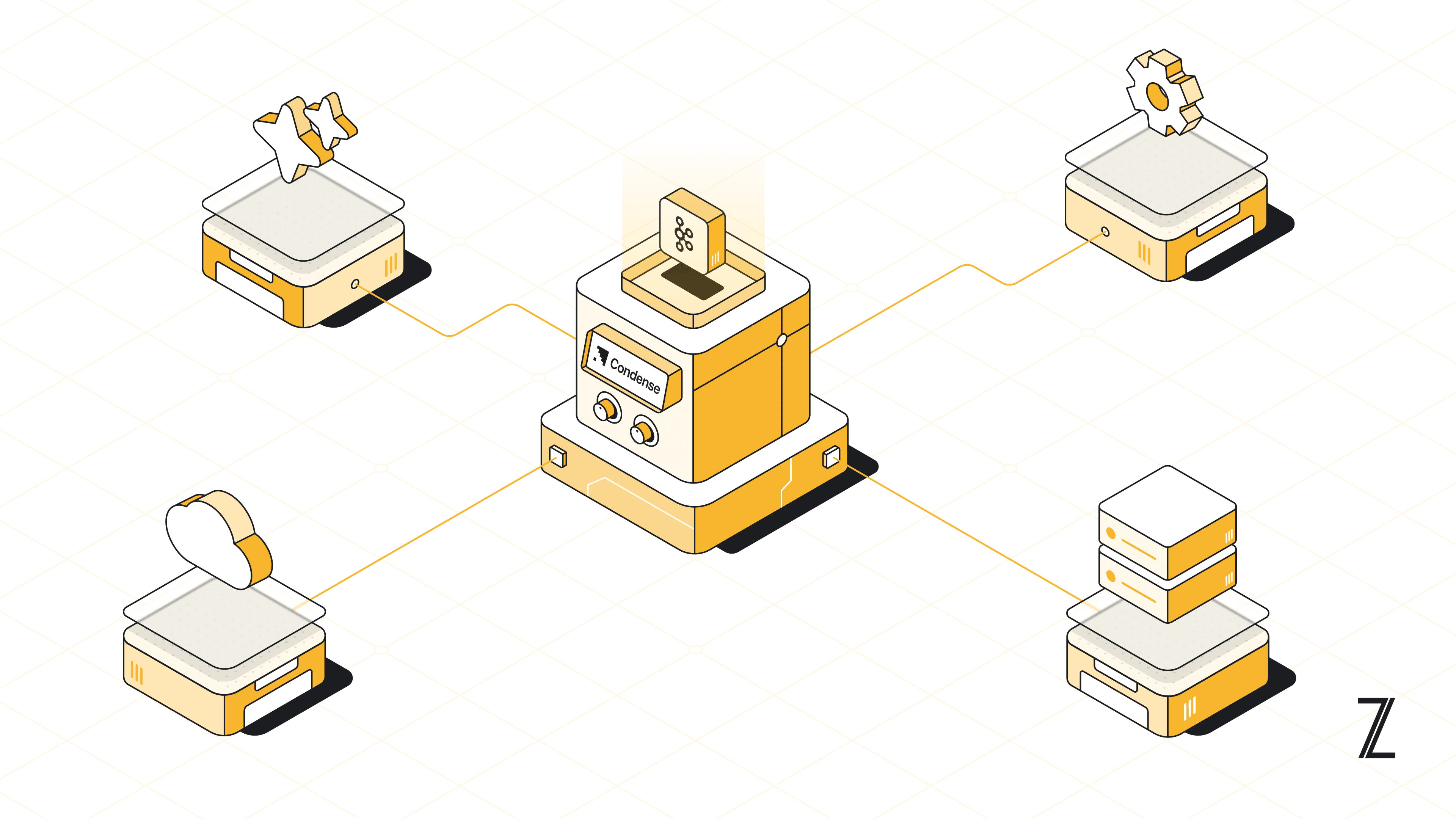
How the Condense Pipeline Operates
Ingestion: Data enters through protocol-agnostic Input Connectors designed for mobility.
Transformation: The Custom Transform Framework (CTF) or No-Code Utilities (like the Split or Alert Utilities) parse and enrich data while it is moving.
Core Streaming: Data flows through a Managed Kafka Backbone located inside the company's private cloud.
Observability: The Observability Layer provides real-time visibility into metrics and logs through dashboards and AI insights.
Action: Enriched data is sent to downstream apps or dashboards via Output Connectors like HTTPs or Database stores.
Conclusion
The choice between self-managed Kafka and Condense is not just a technical decision, it is a strategic one. One path keeps engineering teams tied to infrastructure, constantly reacting to scaling issues, failures, and maintenance. The other removes that burden and turns data streaming into a reliable foundation for building and innovating faster.
Condense transforms Kafka from something you have to manage into something you can simply use. With BYOC cost efficiency, automated scaling, built-in intelligence, and industry-ready connectors, it eliminates the hidden operational overheads of enterprises.
The impact is tangible, which helps to achieve faster time to market, lower total cost, and a clear shift in engineering effort from maintenance to meaningful product development. Teams stop firefighting infrastructure and start building the features, intelligence, and experiences that directly drive business outcomes.
In a world where real-time data defines competitive advantage, the question is no longer whether you can run Kafka yourself, but whether it’s worth the cost, effort, and distraction from what truly drives your business. Condense ensures your data infrastructure is no longer a bottleneck, but a multiplier for growth.