
TL;DR
As cloud adoption matures, enterprises are facing two major challenges. Infrastructure costs continue to rise, and data sovereignty regulations are becoming stricter. The traditional SaaS model, where vendors host both the application and customer data, no longer fits every organization’s compliance and cost strategy.
This shift has accelerated the adoption of Bring Your Own Cloud, also known as BYOC.
In this guide, you will learn what BYOC means, how the BYOC deployment model works, how its architecture is structured, the key benefits of BYOC for enterprises, and how it compares to traditional SaaS.
What is BYOC?
Bring Your Own Cloud (BYOC) is a deployment model where an organization uses a third-party vendor's software but hosts the data and workloads within its own cloud environment (AWS, Azure, or Google Cloud).
In this architecture, the vendor provides the management plane (orchestration and UI), while the customer retains control of the data plane (storage, compute, and licensing).
How BYOC Architecture Works
A typical BYOC architecture includes three core components.
First, vendor managed control services handle upgrades, scaling logic, monitoring automation, and platform health.
Second, customer owned cloud infrastructure includes virtual networks, storage buckets, databases, and compute clusters.
Third, secure communication channels connect the vendor control layer to the customer’s cloud environment without exposing sensitive data.
The defining principle of BYOC architecture is that customer data never leaves the customer’s cloud account. This design allows enterprises to maintain control while still benefiting from managed software capabilities.
BYOC vs Traditional SaaS
In a traditional SaaS model, the vendor hosts both the software and the customer’s data. Infrastructure visibility is limited, pricing includes bundled infrastructure costs, and data migration can be complex if switching vendors.
In a BYOC model, the vendor provides the application control layer while the customer owns the infrastructure and data. This creates full cost transparency, stronger compliance alignment, and reduced vendor lock in risk.
For enterprises that prioritize governance and financial control, BYOC offers structural advantages over conventional SaaS.
Key Advantages of BYOC
> Data Sovereignty and Compliance
BYOC allows for keeping sensitive telemetry and application data inside a private security perimeter. This simplifies compliance with residency requirements like GDPR or HIPAA, as the data never physically leaves controlled storage.
> Cost Optimization and Licensing
Cost transparency is one of the primary drivers of BYOC adoption. By using existing infrastructure, organizations avoid the "SaaS premium" on compute and storage. It is possible to leverage existing license entitlements (BYOL) and apply cloud provider credits to usage, significantly reducing total cost of ownership (TCO).
> Reduced Vendor Lock-in
Because data stays in customer-owned buckets, there is no trap within proprietary vendor silos. If the decision is made to switch management platforms, the data remains in-house, making migration a matter of hours rather than months.
> Enhanced Security Governance
Internal security teams maintain full visibility. Organizations can use their own encryption keys (BYOK), monitor traffic with existing SIEM/EDR tools, and ensure the software follows specific corporate governance protocols.
> Seamless Legacy Integration
For complex environments involving legacy hardware or private routing, BYOC provides the flexibility to connect modern SaaS tools to older, on-prem systems without complex workarounds.
The Strategic Trade-off
BYOC is not a "plug-and-play" solution. It requires a disciplined FinOps process and a technical team capable of managing the underlying infrastructure. However, for organizations prioritizing control and scalability, it is the most robust path forward. BYOC brings distinct advantages: technical, financial, operational, and compliance-related.
When Should a Company Choose BYOC?
BYOC is well suited for organizations where data sovereignty is critical, cloud spending is under executive scrutiny, vendor independence is strategic, and internal cloud operations capabilities are mature.
Smaller teams without infrastructure expertise may prefer fully hosted SaaS. However, mid sized and large enterprises often find BYOC strategically superior for long term scalability and governance. Overall, teams want the operational simplicity of managed platforms, but without giving up data ownership, security control, or cost efficiency.
Condense: Operationalizing BYOC for Real-Time Data
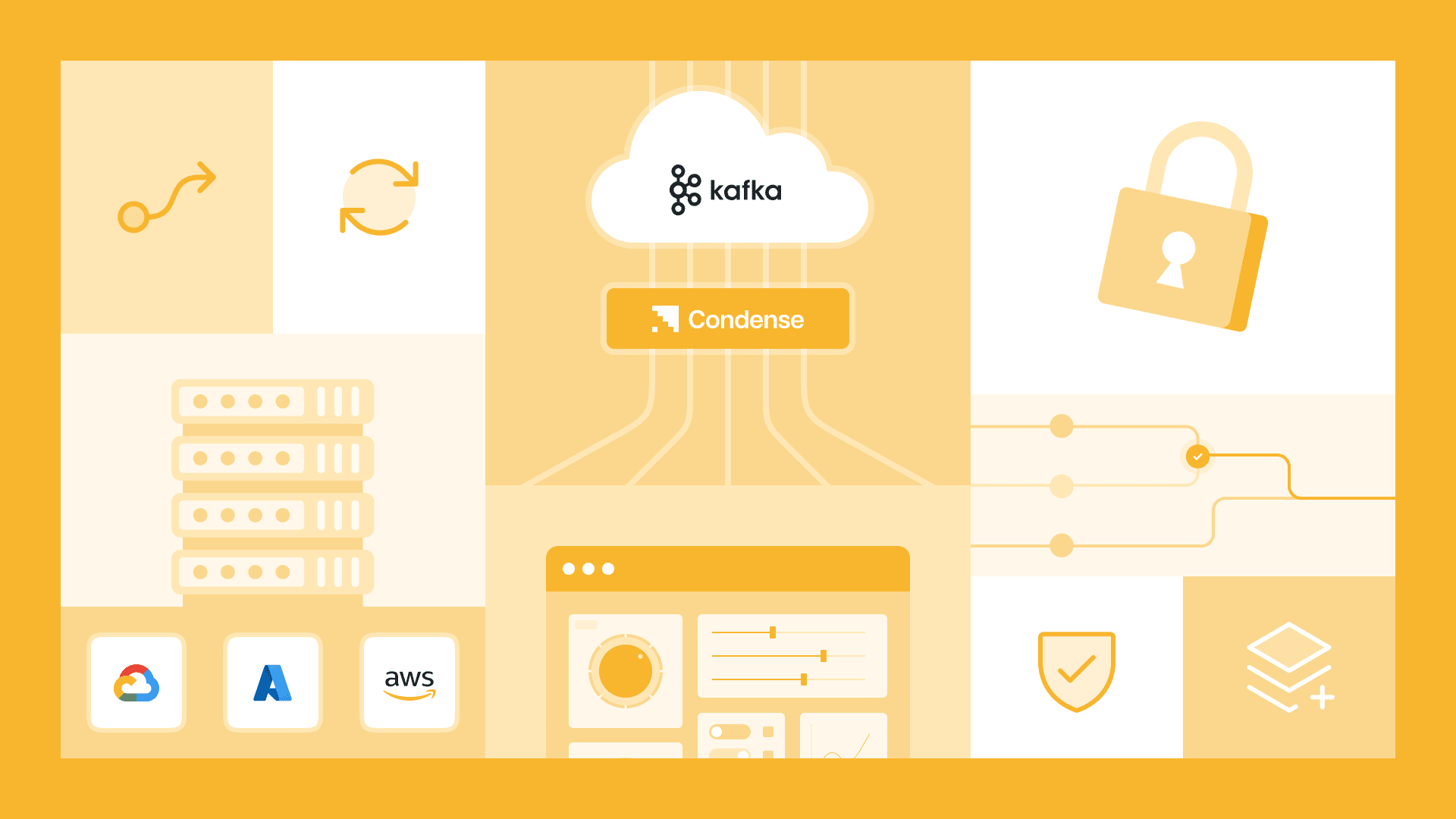
Managing high-performance streams like Kafka in a private environment is notoriously difficult. Condense simplifies this by deploying a production-grade, fully managed Kafka stack directly into your private VPC.
Zero-Access Operations: Condense manages the platform’s health, upgrades, and scaling remotely, but maintains zero access to raw data. The "Three-Tier" architecture ensures management instructions are pulled over secure links, keeping data strictly private.
Massive TCO Reduction: By eliminating SaaS infrastructure markups and optimizing resource allocation, Condense typically delivers a 40% to 70% reduction in TCO compared to traditional managed Kafka providers.
Native Observability: Because the platform runs in the customer's account, it comes with native monitoring also integrates natively with existing monitoring stacks like Datadog, Grafana, or CloudWatch, providing a single pane of glass for the entire data pipeline.
Rapid Time-to-Market: Condense provides verticalized connectors and pre-built transforms for mobility, logistics, and IoT, accelerating deployment from months to days.
Bring Your Own Cloud is more than a deployment model. It represents a strategic shift toward infrastructure ownership, cost transparency, and regulatory alignment. As compliance requirements tighten and cloud economics come under greater scrutiny, BYOC is becoming a foundational architecture pattern for modern enterprises.
For organizations running high performance streaming infrastructure, combining BYOC with a managed platform like Condense delivers both control and operational simplicity.