
TL;DR
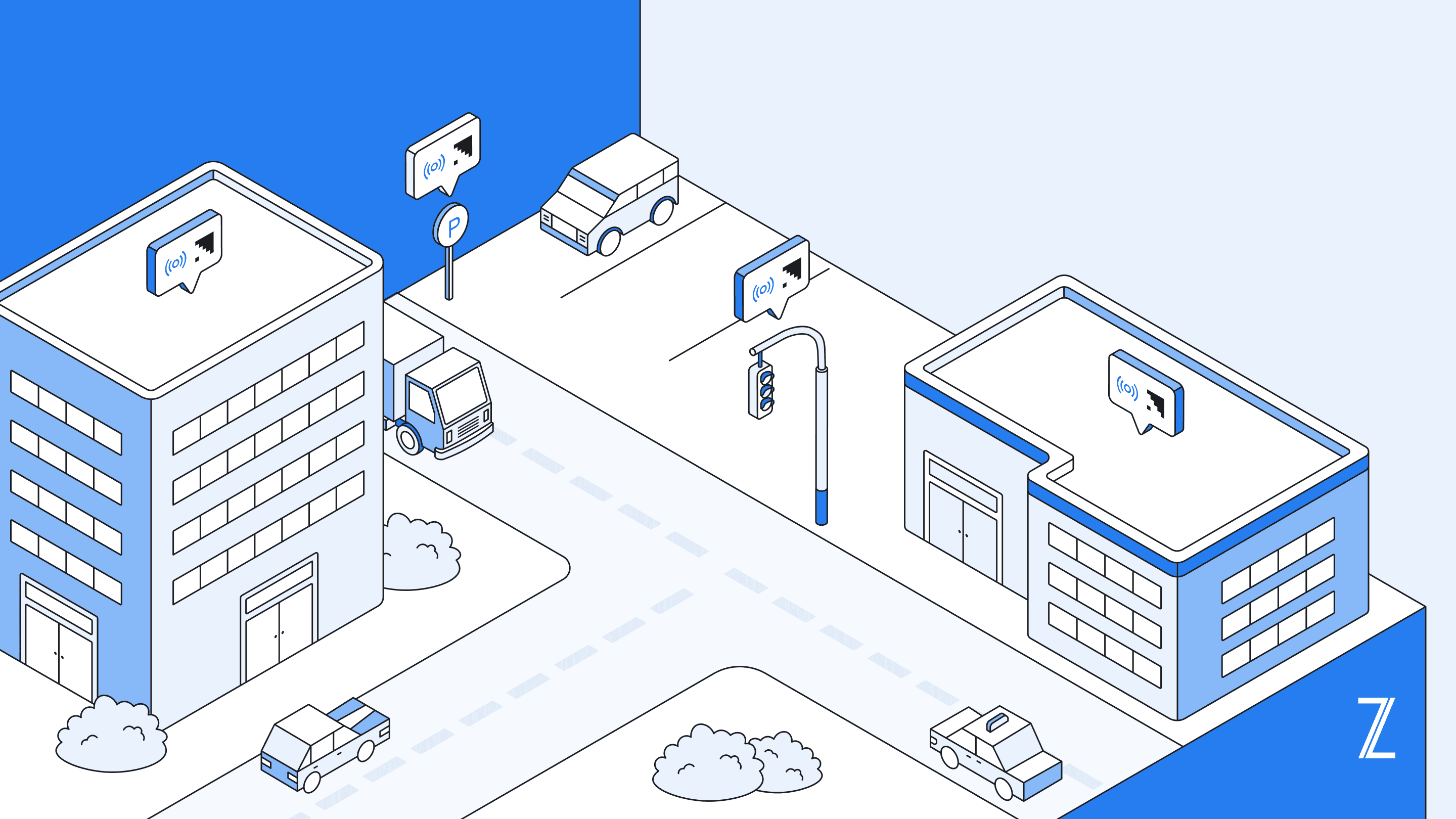
The development of a smart city depends entirely on the ability to collect, process, and act upon data in real-time. Modern urban environments are filled with sensors that monitor everything from traffic flow and air quality to energy consumption and public safety. However, the technical challenge lies in managing the sheer volume and variety of this information. Streaming IoT Sensor Data with Condense provides a standardized framework for urban planners and engineers to build resilient data pipelines that can handle the unpredictable nature of city-wide sensor networks. By leveraging Apache Kafka through a managed, observable platform, cities can transform raw sensor readings into actionable insights that improve the quality of life for their residents.
The Technical Architecture of Urban IoT Streams
In a traditional IoT setup, sensors often send data to localized servers or siloed cloud applications. This creates a fragmented ecosystem where it is difficult to correlate different data sets. A smart city requires a unified architecture where every sensor regardless of its manufacturer or location contributes to a global data stream. Condense facilitates this by acting as the ingestion and orchestration layer for these diverse data sources.
Centralizing Disparate Sensor Networks
A city may have thousands of different IoT devices, including:
Environmental Sensors: Measuring particulate matter (PM2.5), nitrogen dioxide levels, and ambient temperature.
Traffic Management Systems: Using inductive loops and cameras to monitor vehicle counts and average speeds.
Utility Meters: Tracking real-time water and electricity usage to optimize grid distribution.
Public Safety Devices: Monitoring noise levels or pedestrian density in high-traffic areas.
By using Condense, engineers can deploy connectors that pull data from these various endpoints and produce it into dedicated Kafka topics. This centralization is the first step in moving away from batch processing and toward a true real-time urban operating system. When data is streamed rather than stored in isolated databases, the city can react to events as they happen, such as adjusting traffic light timing during an unplanned congestion event.
Scaling for the Modern Metropolis
The most significant hurdle for IoT projects is scalability. A pilot program might involve one hundred sensors in a single neighborhood, but a full-scale deployment could involve millions of devices across an entire metropolitan area. The underlying infrastructure must be capable of handling this exponential growth without manual intervention.
Native Resource Management in Condense
Condense allows municipal engineers to manage Kafka resources natively. As the number of IoT sensors increases, the platform facilitates the scaling of Kafka brokers and the repartitioning of topics. This ensures that the system maintains high throughput and low latency, even during peak data events.
For example, during a major sporting event or a weather emergency, the volume of data from pedestrian and weather sensors may spike. With the native management tools in Condense, the data team can proactively adjust the replication factor and partition count of their topics to ensure no data is lost and that downstream analytical applications stay up to date. This level of control is essential for maintaining the reliability of services that the public depends on for safety and navigation.
Deep Visibility: Monitoring the City’s Digital Pulse
Reliability in a smart city context is not optional. If a sensor network monitoring flood levels goes offline, the consequences can be severe. This is where the Intelligent Observability layer of Condense becomes critical. It provides city engineers with a real-time view of the health of their urban data pipelines.
Three-Tiered Monitoring for IoT Environments
To ensure the city’s digital infrastructure remains functional, Condense monitors three specific tiers:
Infrastructure Health: Tracking the cloud resources (CPU, Memory, Disk I/O) used by the data platform. This ensures that the servers processing the city's data are not reaching their capacity limits.
Platform Stability: Monitoring the Kafka brokers and metadata management. In a smart city, the Kafka cluster is the central nervous system; the platform tier ensures that the brokers are communicating correctly and that data persistence is stable.
Service Connectivity: This tier tracks the status of the connectors that link physical IoT devices to the cloud. If a group of air quality sensors in a specific district stops sending data, the service-level monitoring will highlight the failure immediately.
Integrated Grafana dashboards allow technical teams to visualize these metrics over time. For instance, they can correlate a spike in network latency with a specific hardware update or a network outage in a particular city ward. This granular visibility reduces the time required to diagnose and fix connectivity issues across the city.
Governance and Transparency in Public Data
When managing public infrastructure, accountability is a primary requirement. The Activity Auditor in Condense provides a comprehensive governance layer for all smart city data operations. It maintains a 30-day record of every action performed within the platform, including who created a pipeline, who modified a connector, and when a user role was updated.
Auditing for Public Policy and Compliance
Smart city initiatives often involve multiple stakeholders, including municipal departments, private contractors, and research institutions. The Activity Auditor ensures that every change to the data infrastructure is documented.
Transparency: If an automated traffic system begins behaving erratically, the Auditor can show if a recent configuration change to the underlying data pipeline was the cause.
Accountability: Every entry includes a timestamp and the username of the individual responsible, ensuring a clear trail of responsibility.
Security: Monitoring user role changes ensures that sensitive urban data is only accessible to authorized personnel, helping the city meet its data protection obligations.
This audit trail is not just for troubleshooting; it is a vital tool for long-term urban planning. By reviewing a month’s worth of activity logs, city officials can see how their data infrastructure is evolving and identify areas where more resources or better training are required.
The Role of AI in Urban Data Management
The sheer volume of data generated by a smart city is too large for manual oversight alone. Condense utilizes purpose-built AI agents to assist in the management of these massive Kafka streams. These agents analyze the telemetry from thousands of sensors to identify anomalies and suggest technical fixes.
If an AI agent detects that a specific IoT topic is experiencing significant consumer lag, it can alert the engineering team and suggest specific remediations, such as increasing the number of partitions to allow for more parallel processing. This predictive maintenance approach is a game-changer for smart cities, as it allows technical teams to solve problems before they result in a service outage for the public.
Practical Application: Managing a Smart Traffic Grid
To understand the impact of Condense, consider the management of a smart traffic grid. In this scenario, thousands of sensors at intersections are streaming data about vehicle volume and speed.
Ingestion: Connectors pull real-time data from the intersection controllers into Kafka topics managed by Condense.
Monitoring: The Intelligent Observability layer tracks the throughput. If a network issue in the city center slows down the data flow, the Grafana dashboard alerts the traffic control center.
Governance: If an engineer adjusts the weighting of traffic data in the algorithm to favor public transit, the Activity Auditor records the change.
Action: The processed data is sent to a real-time traffic management application that adjusts signal timings across the city to reduce idling and emissions.
In this workflow, every component of the Condense platform works together to ensure that the data is accurate, the system is performant, and the changes are auditable.
The Future of Urban Data with Condense
As cities continue to grow and become more reliant on digital technology, the need for robust data pipeline observability and management will only increase. Condense provides the necessary tools to turn a collection of individual sensors into a cohesive, intelligent urban system. By offering native Kafka management, deep visibility through integrated dashboards, and a strict governance framework, the platform allows cities to focus on building better services rather than managing the complexities of distributed data systems.
Streaming IoT sensor data with Condense is more than a technical upgrade; it is a strategic shift toward a more responsive, transparent, and efficient city. With 30-day log persistence and AI-driven insights, municipal teams can ensure that their smart city infrastructure is prepared for the challenges of tomorrow.
Conclusion
The transition to a smart city requires a foundation of reliable, real-time data. Streaming IoT Sensor Data with Condense provides this foundation by simplifying the management of complex Kafka ecosystems. With integrated monitoring, centralized auditing, and the ability to scale resources natively, Condense ensures that urban data pipelines are as resilient as the physical infrastructure they support. By providing total visibility into the digital pulse of the city, Condense empowers urban leaders to build smarter, safer, and more efficient environments for everyone.