
TL;DR
How can a vehicle traveling at high speeds make critical safety decisions while communicating with a cloud infrastructure that is often too slow or complex to keep up? The answer is found in how data is organized and moved in real time. Connected Cars & Autonomous Vehicles: How Condense Enables Live Data Streaming is about more than just moving data packets from one place to another. It is about creating a live sensory nervous system for modern vehicle fleets. By using a platform designed specifically for mobility, Condense allows manufacturers to collect massive amounts of data, translate complex hardware languages instantly, and lower cloud costs, all while keeping the data safe within their own private cloud environment.
The Challenge of Massive Data Volume and High Frequency
Modern connected cars are essentially moving data centers. A single vehicle can generate a massive amount of information every hour. Autonomous vehicles, which use sophisticated cameras and sensors like LiDAR, generate even more. For a manufacturer with thousands of cars on the road, the main problem is not just the total amount of data, but the extreme frequency at which it arrives.
In a connected car system, data does not arrive at a steady pace. When a car encounters a sudden traffic change or an emergency event, the frequency of data sends can jump from once per second to a hundred times per second. Many standard data platforms fail or become incredibly expensive when these spikes happen.
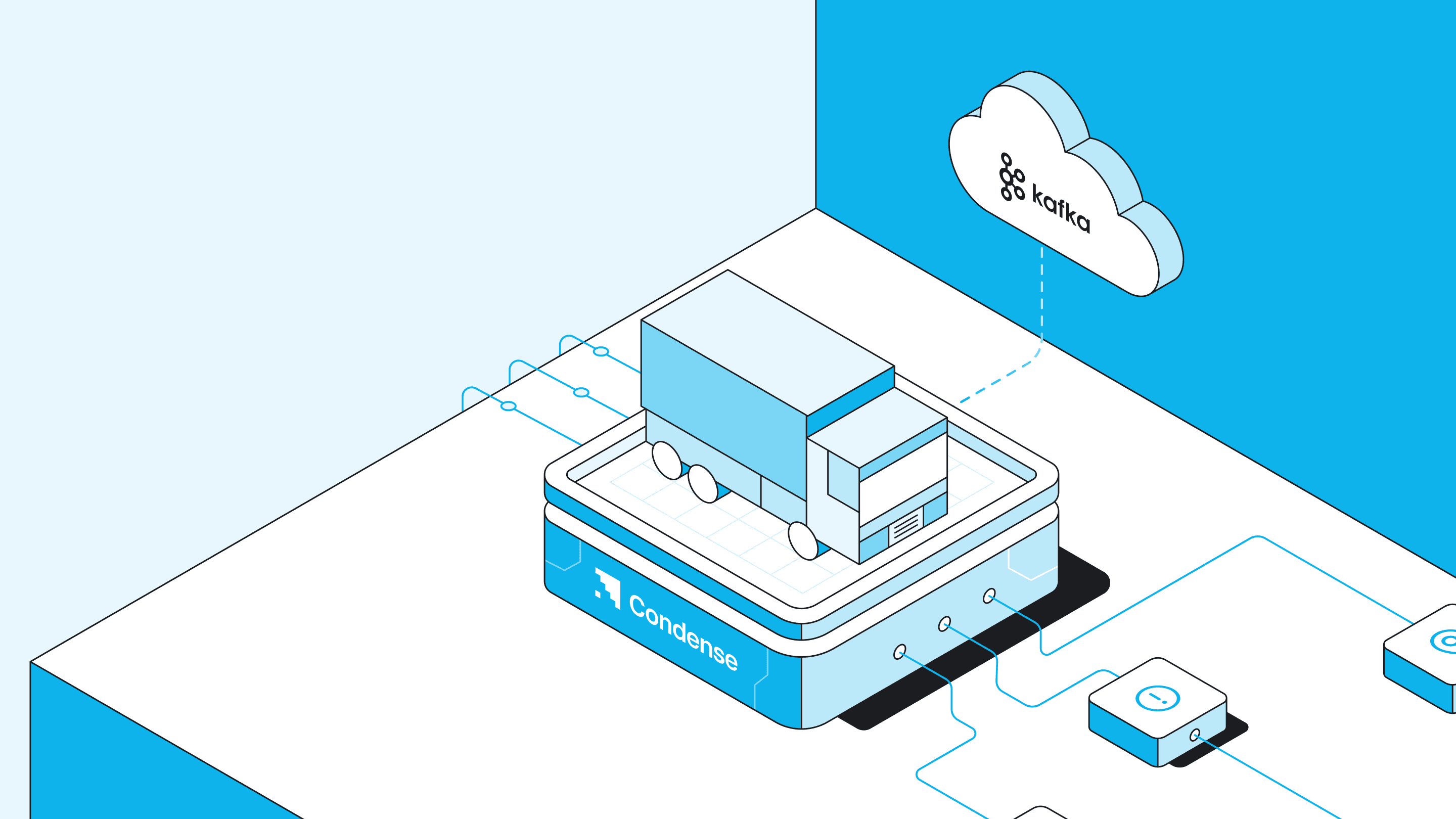
Condense is built to handle these bursts. It uses a Kafka-native architecture which is the industry standard for managing high volumes of data. This ensures that every piece of information is recorded in the correct temporal order. This order is vital for engineers who need to reconstruct exactly what happened during a trip or a specific autonomous event. Because Condense manages the scaling of these data streams automatically, the system stays stable even when thousands of vehicles start streaming high-frequency data at the same time.
The Critical Need for Real-Time Data Parsing
One of the biggest bottlenecks for engineers is the lack of a universal language for vehicle sensors. A tire sensor might send data in one format, while a battery sensor uses another, and the vehicle gateway uses yet another. Usually, engineers have to write unique, manual code for every new sensor or car model just to translate that data into something a computer can read. This creates a mess of code that is hard to maintain and prone to errors.
Condense solves this with simple tools called Utilities. These are pre-built, no-code blocks that can instantly translate raw hardware data into clear, usable information.
Custom Logic without the Hassle: If a vehicle uses a very specific or secret hardware language, engineers can use the Custom Transform Framework (CTF) to write the translation logic once in a language they already know.
Adding Context In-Flight: Translation is not just about changing formats. A Condense utility can take a simple GPS location and automatically add information like the current weather or road conditions. This happens while the data is moving. This means the final information reaching the dashboard is already enriched and ready for immediate use.
Optimizing Cloud Costs and Operations
Cloud bills are often the biggest reason why companies struggle to grow their connected car programs. Many platforms charge a fee for every bit of data that moves through them. This makes it very expensive as you add more cars to the fleet.
Condense changes this by using a model called Bring Your Own Cloud (BYOC).
Eliminating Extra Fees: Because Condense lives inside your own cloud account, such as AWS, Azure, or Google Cloud, the data never leaves your secure environment. This removes the high fees usually charged by third-party platforms for moving data in and out of their systems.
Smart Compute Scaling: Condense only uses the computer power it needs at any given moment. Late at night when fewer cars are driving, the system automatically shrinks to save money. When morning traffic starts, it grows to handle the load.
Operational Filtering: Engineers can use Condense to filter out useless data before it ever gets stored. This prevents the cloud bill from growing due to the storage of junk information that has no long-term value.
Reclaiming Engineering Time for Complex Logic
The hidden cost of building your own data system from scratch is the time it takes to keep it running. Usually, a company needs a large team of specialized engineers just to manage the servers, fix crashes, and perform software updates. This takes their focus away from the actual product.
Condense takes over these heavy infrastructure tasks. It handles the server management and fixes itself if something goes wrong. This changes everything for the engineering team. Because they are no longer busy fixing servers or managing Kafka clusters, they have significant time available for innovative complex logic writing.
When engineers are offloaded from infrastructure duties, they can focus on:
Autonomous Pathfinding: Improving how cars navigate through busy cities and unpredictable traffic.
Safety and Predictive Alerts: Developing new ways to warn drivers about dangers before they become accidents.
Vehicle-to-Everything (V2X): Creating ways for cars to talk to traffic lights and pedestrians to reduce congestion.
With Condense, engineers move from being server mechanics to being the architects of the future of driving.
Key Takeaways
Handles High Scale: The system stays fast and reliable even when millions of vehicle events happen at the same time.
Easy Hardware Translation: Simple no-code tools remove the need to write manual code for every new sensor.
Full Data Ownership: You keep 100% control of your data in your own cloud account, which significantly lowers your monthly bills.
Focused Engineering: Teams save time by offloading infrastructure tasks, allowing them to focus on proprietary car logic.
Proven Success: The platform allows you to go from a basic idea to a working, production-ready product in weeks.
The Architecture: How the Data Moves
Ingestion: Data is collected from the car sensors via a secure gateway.
Parsing: No-code utilities turn raw sensor data into clear, standardized information.
Logic: The Custom Transform Framework applies your specific rules, like checking for safety risks.
Streaming: The data moves through a secure Kafka backbone inside your own cloud.
Action: Real-time alerts are sent to drivers or fleet managers the moment a change is detected.
Conclusion
The race to build better connected and autonomous cars is a race to manage data more effectively. To succeed, manufacturers must move away from expensive and complicated systems that they have to build and maintain themselves. Connected Cars & Autonomous Vehicles: How Condense Enables Live Data Streaming provides the most efficient path forward. By combining fast data handling, easy translation tools, and the security of your own cloud, Condense lets companies focus on what truly matters. It allows you to focus on the software that actually drives the vehicle and ensures passenger safety, rather than the tools that just move the data.