
TL;DR
Apache Kafka is one of the most powerful distributed event streaming platforms ever built but operating it in production requires significant expertise and ongoing effort. In the modern landscape of real-time intelligence, the ability to process streaming data is no longer an optional luxury but a core requirement for enterprise scalability. For years, Apache Kafka has served as the industry standard for event streaming. However, as organizations pivot toward Agentic AI and complex real-time data pipelines, the operational overhead of managing "Raw Kafka" has become a significant bottleneck for development teams.
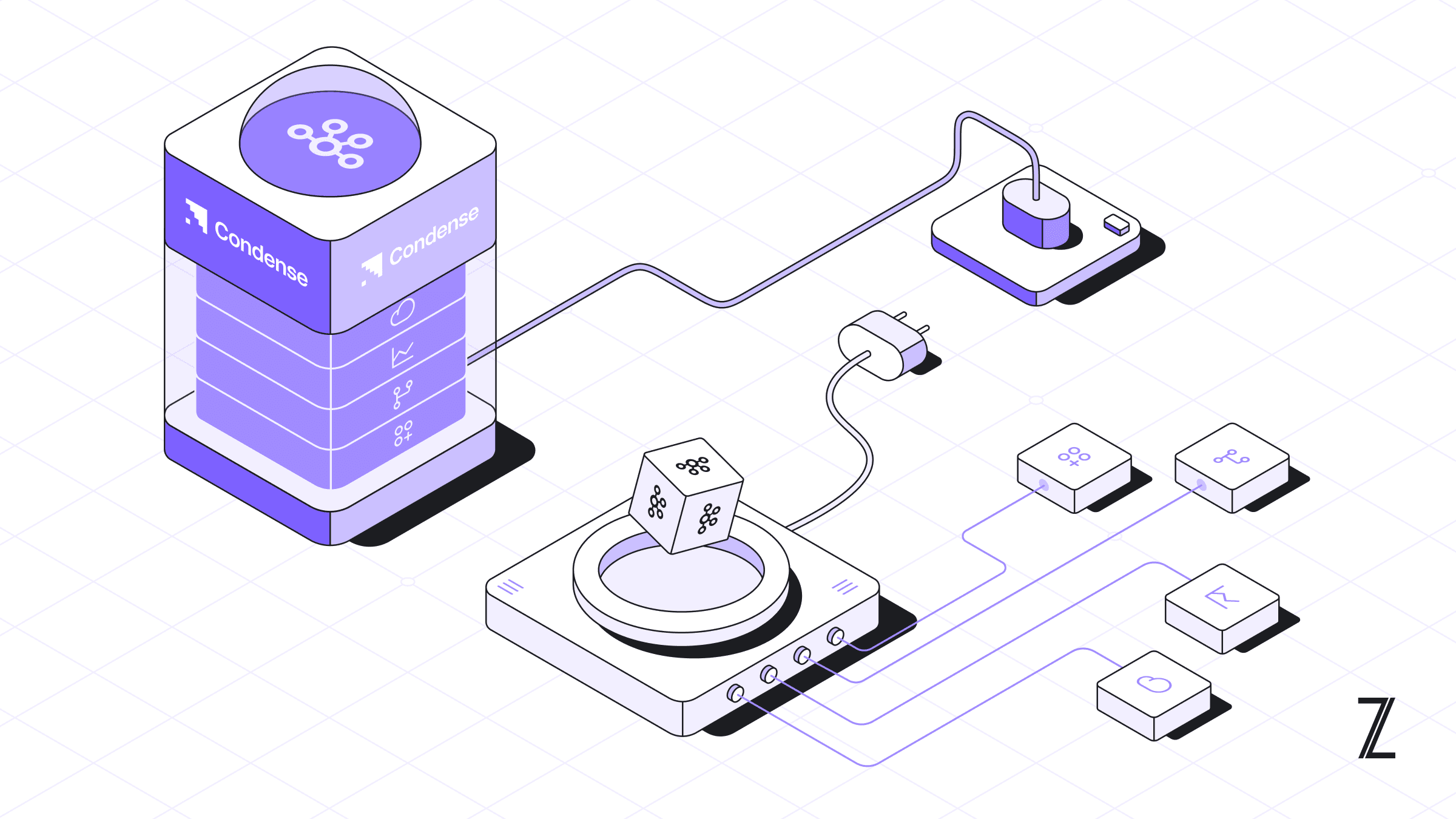
Condense has emerged as a specialized alternative designed to abstract the complexities of infrastructure, allowing developers to focus on data logic rather than system maintenance. This analysis explores the technical and operational advantages of Condense over traditional Kafka implementations across four critical pillars: Connectors, App Lifecycle, Monitoring, and Infrastructure. Even managed Kafka services which handle broker operations still leave stream processing, connectors, observability, and deployment entirely to the development team.
1. Streamlining Data Connectivity
In a traditional Kafka environment, integrating diverse data sources requires significant manual effort. Developers often face the "Coding Connectors" hurdle, where specialized Java or Scala skills are mandatory to write and maintain industry-specific connectors. As data ecosystems grow, managing these complex schemas and ensuring failover becomes an escalating challenge.
The Condense Advantage:
Universal & Industry-Ready Connectors: Condense provides pre-built, specialized connectors (such as Telematics for Mobility) that include built-in parsing for complex schemas. This eliminates the need for manual boilerplate code.
Configurable Output Sinks: Rather than writing custom integration code, teams can deploy sink/source connectors through a visual UI, directly embedding them into the data pipeline with minimal friction.
2. Accelerating the Application Lifecycle
Managing the lifecycle of a streaming application on raw Kafka involves disjointed workflows. Developers frequently switch between IDEs, Git repositories, and various cloud consoles. This "Disjointed Lifecycle" often leads to weeks spent on "Glue Code" writing the necessary boilerplate just to make different components communicate.
The Condense Advantage:
In-Built AI IDE & Git Sync: Condense integrates purpose-built AI agents within the environment to help create, test, and build custom transforms. With native Git support, the transition from development to production is seamless.
Native Stream Processing: Unlike Kafka, which often requires external engines like Flink or Spark, Condense handles logic as containerized services. This "Native" approach ensures that custom transforms run efficiently without the need for additional external infrastructure.
3. Enhancing Observability and Insights
Monitoring a raw Kafka cluster often results in an "Absence of Insights." Observability layers are typically built using disjointed CLI tools and multiple monitoring stacks, requiring manual log aggregation to understand system health. This manual tracking often leads to over-provisioning or under-utilization, increasing operational costs.
The Condense Advantage:
Native Dashboards: A built-in visual pipeline view allows teams to see data moving in real-time. This enables immediate action based on the state of services, logs, and configurations.
Purpose-Built AI Agents: Beyond basic monitoring, Condense employs AI agents that autonomously check the system to generate actionable insights, moving from reactive monitoring to proactive system management.
4. Simplifying Infrastructure and Operations
The "Complex Setup" of raw Kafka involves manual provisioning of cloud compute resources and intricate networking configurations. Maintaining uptime between infrastructure upgrades and cross-dependencies often turns into a "Maintenance Nightmare," where security and compliance governance become increasingly difficult to manage over time. Visibility into raw Kafka requires assembling separate monitoring tools JMX exporters, Prometheus, and Grafana dashboards which adds weeks of setup before a team can see what's happening in their pipelines.
The Condense Advantage:
Condense runs Kafka inside your own cloud account through its BYOC deployment model giving developers Kafka's power without the ops burden, while keeping data sovereignty intact.
Automated Provisioning: Deployment of cloud resources is automated and tailor-made for data streaming within the user's specific cloud subscription.
Fully Managed Maintenance: The Condense team handles all upgrades, patches, and downtime recovery. This provides a stable interface with a guaranteed 99.95% availability.
Enterprise-Grade Security: Organizations benefit from out-of-the-box governance, audits, and information security compliance certifications, removing the burden of manual security management.
Conclusion: Enabling the Future of Agentic AI
For a broader view of how Condense compares against other managed Kafka platforms not just raw Apache Kafka see our streaming platform comparison guide. While Apache Kafka remains a powerful tool for message queuing, the demands of Agentic AI and real-time data processing require a more integrated approach. By replacing manual coding and infrastructure management with automated, AI-driven workflows, Condense reduces the "Total Cost of Ownership" for data pipelines.
For enterprise development teams, the shift from Raw Kafka to Condense represents a move from managing infrastructure to delivering value. It enables a faster time-to-market and ensures that the data architecture is robust enough to support the next generation of autonomous AI agents.