
TL;DR
On December 8, 2025, the enterprise technology landscape shifted in a meaningful way. IBM announced a definitive agreement to acquire Confluent for approximately $11 billion. This was not simply another infrastructure acquisition. It signaled a deeper change in how enterprises must think about data, decision making, and automation.
For more than a decade, organizations treated data streaming platforms and enterprise data systems as separate concerns. Streaming platforms handled events and transactions. Enterprise platforms handled storage, governance, and analytics. This separation worked when humans were responsible for most decisions.
That assumption no longer holds.
As enterprises begin deploying agentic systems, software that can observe, decide, and act without human intervention, data architectures built around delay and batch processing are proving insufficient.
Agents Require a Nervous System
The first wave of generative AI focused on knowledge. Models were trained on large static datasets and produced responses based on historical information.
Agentic systems operate in a fundamentally different way. They depend on state. They must understand what is happening now.
An agent that rebooks a flight, approves a transaction, or adjusts a supply chain cannot rely on data that is hours old. It needs current information and it needs it immediately. Without real time context, autonomy becomes risk rather than advantage.
This is the problem IBM is addressing through its acquisition of Confluent.
Why IBM and Confluent Fit Together
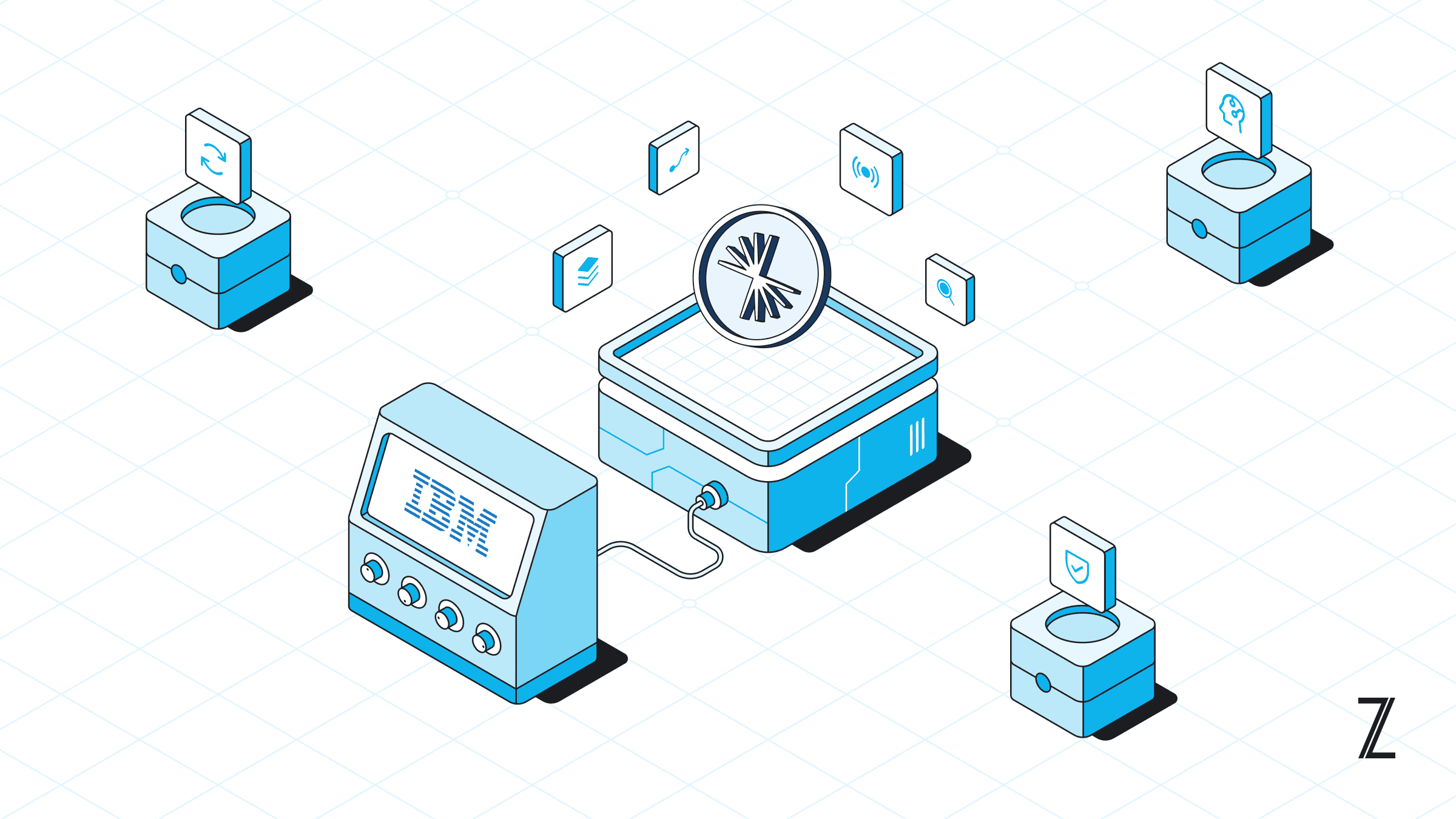
IBM brings orchestration, governance, security, and structured context through platforms such as watsonx. These capabilities allow enterprises to define rules, policies, and controls around automated decision making.
Confluent brings a real time event backbone that can process, enrich, and distribute data the moment it is created. It allows systems to react to business signals as they occur rather than after they are stored.
Together, these capabilities point toward an architecture where decisions are made continuously, not periodically. In this model, the stream becomes the primary source of truth for operational systems.
The Technical Shift Behind the Strategy
The most important change enabled by this acquisition is architectural rather than commercial.
Real Time Inference Inside the Data Flow
Historically, inference followed a multi-step pattern. Data was ingested, stored, processed in a separate environment, and written back to downstream systems. Latency was measured in minutes.
Modern streaming platforms allow inference to happen as events flow through the system. Logic is executed in motion. Decisions are made at event time. This reduces complexity and enables autonomous systems to operate safely at scale.
Standardized Context Through MCP
IBM has also invested heavily in the Model Context Protocol. MCP provides a standard way for agents to consume data, understand schemas, and respect governance boundaries. IBM's investment in Confluent changes the competitive dynamics for teams evaluating managed Kafka platforms here's how Confluent, RedPanda, and Condense compare today.
When real time streams are exposed through MCP compatible interfaces, agents can subscribe directly to business events. A customer service agent does not wait for a ticket to be created. It reacts immediately to a failed payment event and initiates resolution before the customer is aware of the issue.
This represents a shift from reactive systems to proactive ones.
The Gartner Reality Check
While the strategic direction is clear, execution will not be simple.
Recent research from Gartner highlights the operational and governance challenges enterprises face when deploying real-time streaming platforms at scale. These platforms require specialized skills and disciplined operating models.
Kafka based systems are powerful, but they are not easy to operate. This acquisition does not remove the need for teams that understand event driven architecture, stream processing, and failure handling in real time systems.
Governance risks also increase as systems gain autonomy. An agent acting on incorrect data can create immediate and costly consequences. Observability, lineage, and policy enforcement become essential when automated systems can write back into core business platforms.
Cost is another concern. Autonomous systems operate continuously. Without clear financial controls, streaming usage, API calls, and inference costs can grow rapidly.
These challenges do not undermine the opportunity, but they must be addressed deliberately.
What Enterprise Leaders Should Focus on in 2026
This acquisition should be viewed as a signal rather than a solution.
Enterprise leaders should focus on how quickly their systems can understand current conditions and act correctly. Early efforts should validate low latency decision making for narrow use cases such as fraud detection or dynamic pricing.
As autonomy increases, governance and observability must be implemented before expanding scope. Systems should be designed to detect data quality issues before agents are allowed to act.
Finally, financial controls must evolve. Agents should be governed with the same discipline applied to human operated systems.
What This Deal Ultimately Represents
IBM did not acquire Confluent simply to expand its infrastructure portfolio. It acquired a critical component of what modern enterprises increasingly require: a real time nervous system.
As organizations move from conversational interfaces to systems that take action, competitive advantage will depend on speed, accuracy, and control. Batch oriented architectures were built for a different era. That era is coming to an end.
A Practical Alternative to Increasing Complexity
The IBM–Confluent acquisition makes one thing clear.
Real-time data has moved from a specialist concern to a foundational enterprise capability.
It also highlights a growing challenge. As organizations pursue real-time, agent-driven systems, the underlying platforms are becoming more complex, more expensive, and harder to operate. Stitching together multiple products for ingestion, streaming, governance, and AI readiness places a heavy operational burden on teams.
This is where a simpler architectural approach becomes important.
Enter Condense
Condense is a unified real-time data platform designed to support continuous decision-making without the overhead of assembling and managing multiple infrastructure layers. For teams reassessing their streaming platform choice in light of IBM's Confluent investment, our platform comparison covers the full range of options.
Condense brings ingestion, processing, state management, and AI readiness together in a single, coherent system. It is built to support event-driven and agent-driven workloads while maintaining enterprise-grade control, observability, and reliability.
Unlike large composite stacks, Condense is designed to remain flexible. It can be deployed across public cloud environments or on premises, allowing organizations to evolve their real-time capabilities without introducing unnecessary vendor lock-in.
For enterprises rethinking how real-time data should support autonomous systems, Condense offers a more direct and operationally manageable path forward.
Try Condense Today!