
TL;DR
In the world of real-time data streaming, the only thing worse than a system crash is a system that can’t grow when you need it most. For engineering teams running self-hosted Kafka, cluster expansion is a high-stakes surgery. It is a process often met with anxiety, late-night maintenance windows, and a lingering fear of performance degradation.
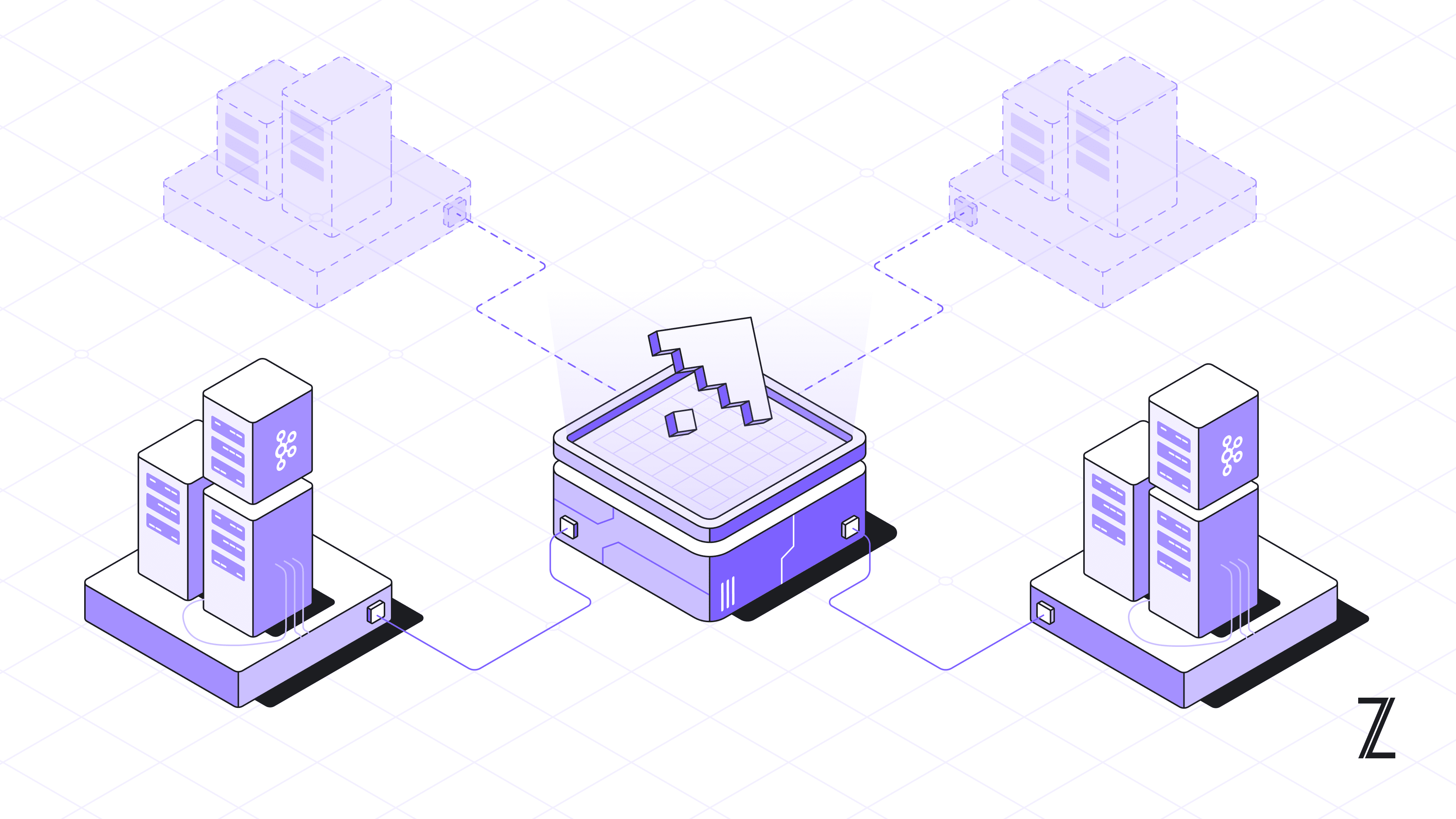
While adding a new broker to a cluster seems simple on paper, the reality of redistributing terabytes of data while maintaining sub-second latency is a different beast entirely. This article explores the mechanical challenges of scaling Kafka and how the Condense platform turns a high-risk manual chore into a seamless, zero-downtime background operation.
The Hidden Complexity of Kafka Scaling
To understand why scaling is difficult, you have to look at how Kafka stores data. Data is divided into partitions, and these partitions are distributed across your brokers. When your data volume grows and your current brokers hit their CPU or storage limits, the logical step is to add more brokers.
However, Kafka does not automatically "rebalance" the workload. A newly added broker sits completely idle, hosting zero data, until you tell it what to do. The process of moving partitions from old, overloaded brokers to the new, empty ones is known as partition rebalancing.
In a DIY environment, this presents three major bottlenecks:
1. The Data Migration Tax
Moving a partition isn't just a metadata change; it is a physical move of every byte of data in that partition’s history. If you are moving a 500 GB partition to a new broker, that data must travel across your internal network. In a self-managed setup, this migration competes with live production traffic for network bandwidth. If not throttled correctly, the rebalance can saturate your network, causing producers to time out and consumers to lag.
2. The "Controller" Burden
The Kafka Controller is responsible for managing partition states. During a massive rebalance, the Controller is flooded with updates. If the cluster is already under heavy load, the added stress of a rebalance can lead to "Controller brownouts," where the cluster becomes unresponsive or starts flapping leader elections, leading to a total system crash.
3. The Human Cost
Because of the risks involved, most organizations refuse to scale during business hours. Instead, they force their best engineers to perform these operations at 2 AM on a Saturday. Even then, an engineer must manually generate partition reassignment JSON files, execute them, and monitor the progress for hours. This is the definition of "infrastructure janitorial work"- it adds zero value to the product and burns out the team.
How Condense Achieves Zero-Downtime Scaling
Condense treats Kafka not just as a set of servers, but as a managed runtime environment. Our platform removes the manual risk by automating the entire lifecycle of cluster expansion. Here is how we ensure that scaling up doesn't mean slowing down.
1. Intelligent, Throttled Rebalancing
The biggest risk in scaling is overwhelming the network. Condense uses a dynamic throttling engine that monitors the health of your production traffic in real-time.
When a new broker is added, Condense initiates the partition move in small, controlled batches.
If the platform detects that live data latency is increasing or that network utilization is hitting a critical threshold, it automatically dials back the migration speed. This ensures that your Application Layer-the part of your business that actually generates value-always has priority over infrastructure maintenance.
2. Predictive Auto-Scaling
Most DIY teams scale reactively. They wait until a broker is at 85% disk capacity or CPU exhaustion before they panic-add a new node. Reactive scaling is dangerous because the cluster is already "stressed" when you start the resource-intensive rebalance process.
Condense uses predictive monitoring. The platform analyzes your data trends and triggers expansion before the cluster hits a performance ceiling. By scaling while the cluster is healthy, the rebalancing process has more "headroom" to complete safely and quietly in the background.
3. Managed Data Sovereignty (BYOC)
Because Condense operates on a Bring Your Own Cloud (BYOC) model, all of this scaling happens inside your own VPC. This is a critical cost and performance advantage. In a standard SaaS Kafka model, scaling might involve moving data out of your account and into theirs, triggering massive egress fees.
With Condense, the data stays on your private network. Expansion is a local event, making it faster, cheaper, and more secure.
4. Automated Rebalancing Logic
In a self-hosted environment, engineers have to decide which partitions move where. This often leads to "hot spots" where one new broker accidentally takes on too many high-traffic partitions.
Real-time observability during cluster expansion is critical monitoring partition rebalancing, consumer lag, and broker health as new nodes come online
The Condense platform uses a sophisticated placement algorithm that accounts for partition size, traffic frequency, and leader distribution. It ensures an even spread across the entire cluster, eliminating the "noisy neighbor" problem that often follows a manual rebalance.
The Business Impact: Beyond the Pipes
The goal of zero-downtime scaling isn't just technical stability; it’s about organizational velocity. When scaling becomes a non-event, the culture of the engineering team shifts.
Reclaiming Engineering Hours
When you offload the "chore" of partition rebalancing to an automated platform, you buy back time. Your senior engineers are no longer spending their weekends monitoring log-recovery metrics. They are freed to focus on the Application Layer-writing the proprietary logic, building new features, and improving the user experience.
Financial Optimization
DIY Kafka usually results in over-provisioning. Because scaling is so painful, teams often run clusters that are 2x larger than necessary just to avoid having to scale frequently. This is a massive waste of cloud budget. Because Condense makes scaling easy and safe, you can run a leaner cluster and only pay for the capacity you need right now, knowing you can expand instantly when the surge hits.
Meeting Strict SLAs
For industries like connected mobility, logistics, or fintech, "sub-second latency" isn't a suggestion-it's a requirement. A manual rebalance that causes a 10-second lag can break an entire ecosystem of downstream applications. Condense’s health-aware scaling ensures that your data pipelines stay within their performance bounds 100% of the time, even during a 2x expansion of the cluster.
From "Infrastructure Janitors" to "Innovation Architects"
Scaling Kafka cluster infrastructure is only half the story stream processing applications also need to scale alongside the brokers. The primary reason to choose a managed platform like Condense over a self-hosted Kafka cluster isn't because your team can't manage it, it's because they shouldn't have to.
Managing the "pipes" is a necessary evil of data streaming, but it is not the core of your business. Every minute an engineer spends on a cluster expansion is a minute they aren't spending on the innovations that move the needle for your company.
Condense provides the security and control of a private cloud with the automated ease of a managed service. We handle the partition moves, the network throttles, and the health checks. Your team handles the future of your product.
Conclusion
Scaling should be a sign of success-a proof that your business is growing and your data volume is increasing. It shouldn't be a source of technical debt or operational anxiety.
By moving to a Managed BYOC model, you eliminate the "Data Migration Tax" and ensure that your infrastructure scales as fast as your ideas. The transition from a self-managed cleanup crew to an innovation-focused team starts by offloading the foundational heavy lifting. With Condense, your Kafka cluster grows silently in the background, allowing you to focus on the only thing that truly matters: the data that drives your business forward.